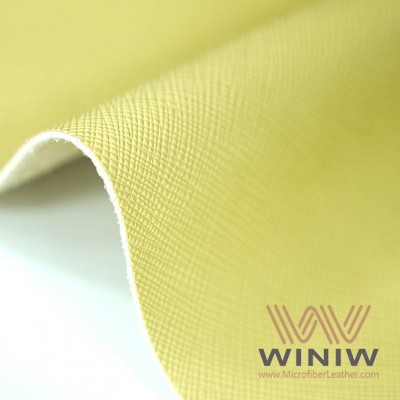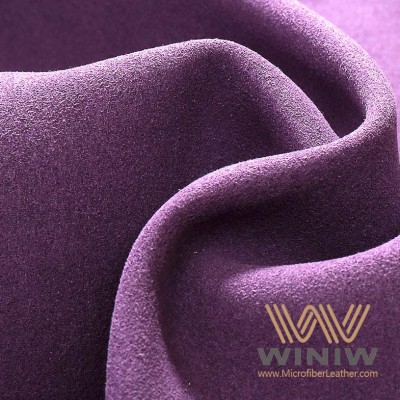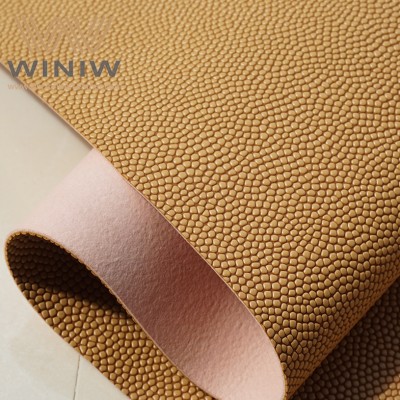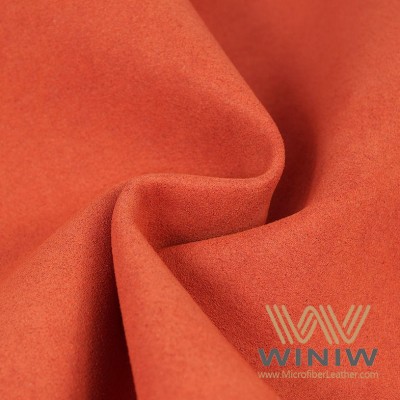
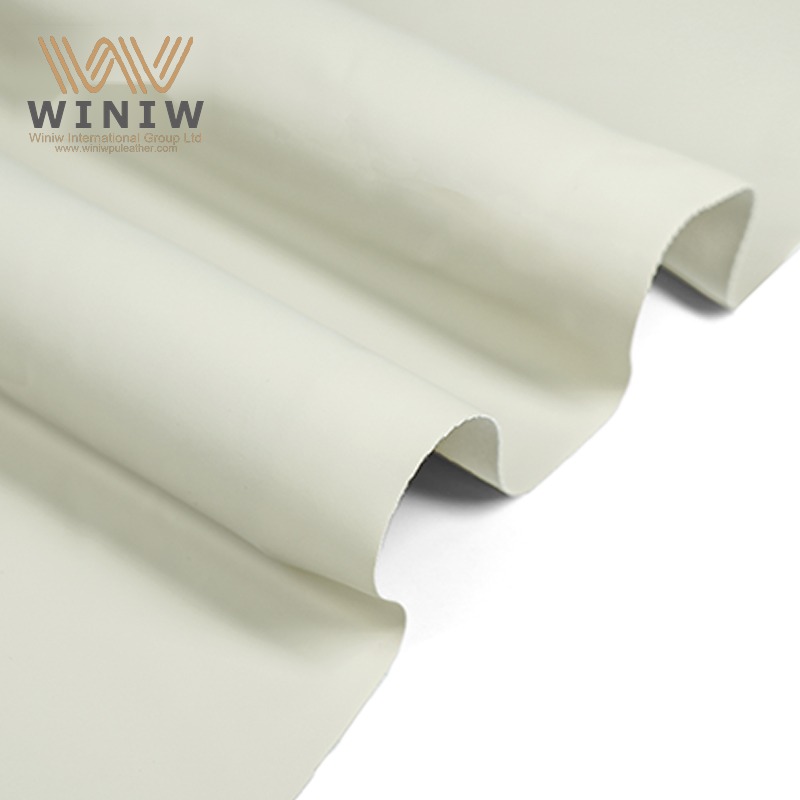
PU leather for workwear supplied against an approved colour card, with lot numbers held for repeat uniform orders and material-level REACH SVHC screening.
Material :
PU coated synthetic leatherComposición :
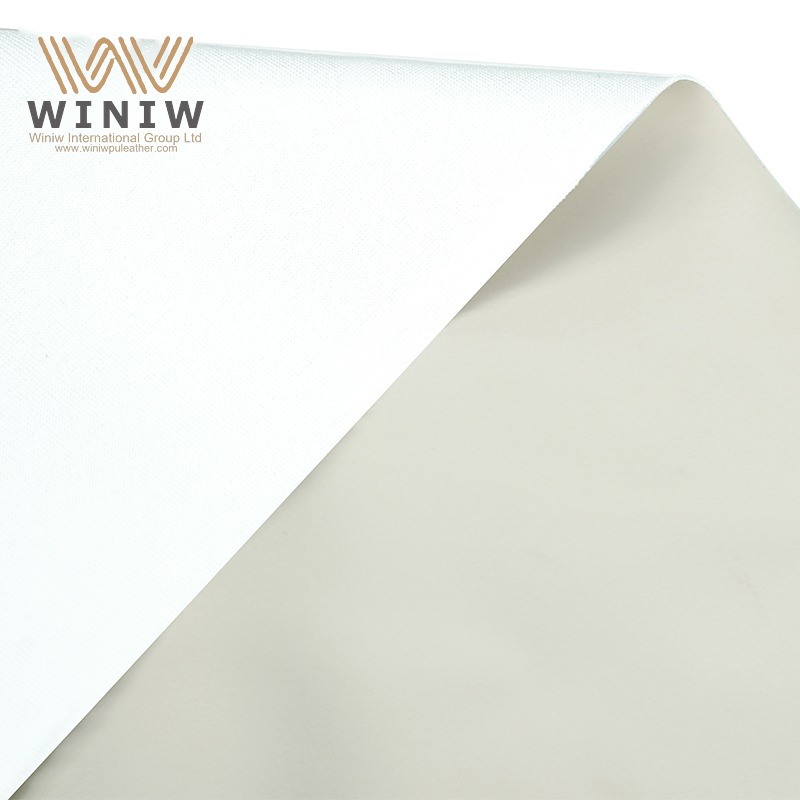
PU (polyurethane) coating on a textile backing, garment gradeEspesor :
Per project confirmationAncho :
Per project confirmationColor :
Cream / ivory as shown; custom shade matched to your referenceTiempo de espera :
Quoted with the order, after the colour card is approvedCapacidad de producción :
About 1,000,000 metres per month across our production linesWorkwear is bought as a range, not as a garment. Jackets, vests, aprons and trims are ordered together, worn together, and replaced piece by piece for years. That is why the hardest part of a workwear programme is not the face of the material: it is keeping the fourth repeat run the same shade as the first, after the line has moved on to other colours.
This PU coated material is run against an approved physical card rather than a screen colour. Thickness, surface texture, gloss and hand-feel are agreed on that card, then held as the reference for every roll in the programme. Because the material is coated to your specification instead of being pulled from a fixed catalogue, the same reference can be reopened a year later for a replacement order.
01
Colour approval
The card is signed before the first roll. Everything after that is measured against it, including the replacement run two seasons later.
02
Roll continuity
A range is cut from several rolls. Lot numbering and a shade check at the roll end keep one jacket from carrying two tones.
03
Repeat orders
The reference stays open. A top-up order is coated to the card you signed, not to a closest match on the current range.
| Parameter | Current Product Information | Buyer Confirmation |
| Base material | PU (polyurethane) coated synthetic leather | |
| Face and gloss | Matte to low gloss; grain, gloss and hand-feel to order | Agreed on card |
| Shade | Cream / ivory as shown; colour matched to your reference | Physical card required |
| Gauge | Per project confirmation | To be agreed on swatch |
| Roll width | Per project confirmation | Stated for your lay plan |
| Run size | 300 m per colour as a standard run | Trial quantities discussed |
| Roll packing | Roll, inner poly bag, outer PP sleeve; recyclable packing on request | |
| Proofing | Free A4/A3 swatch, freight collect; colour proofing 3–7 days | |
| Settlement | T/T 30% deposit, 70% before shipment; L/C accepted | |
| Chemical screening | Intertek SZHH01505701, material level |
Shell jackets
The largest area in the range, and the part where a shade step reads most clearly under site lighting.
Vests and bodywarmers
Cut from the same reference as the shell, so the two pieces can be worn as a set.
Aprons and trims
Small parts that sit next to the main panels, where a half-shade difference is easy to see.
Request a card for each colour in the range, not one card for the collection. A buyer who approves four colours on four cards has four references to reorder against, and no argument later about which shade was meant.
01 SPECIFY
Spec sheet
Part list, target hand-feel, colour reference and the wear environment.
02 APPROVE
Colour card
Physical card per colour, signed off before coating starts.
03 CONFIRM
Sew-off
One garment sewn from the approved material on your own line.
04 REPEAT
Bulk
Run to the signed card, lot numbered, packed for the forwarder you use.
Shade consistency is not a promise made in a brochure; it is a set of settings on a line. Our coating sits in Jinjiang, Fujian, and a workwear programme is scheduled across the fifteen-plus facilities we run, with more than 25 years behind the process and output of roughly 1,000,000 metres a month. The three points that decide your colour are the coating head, the oven profile and the winder.
The coating head sets how much material lands per square metre; a small drift there reads as a tone shift, not as a weight defect. The oven cures the face continuously, so the start and the end of a run see the same heat history. The winder holds tension, and a slack roll spreads with a wave that later shows as shading down a panel. When a programme runs for years, these three are what your replacement order is really depending on.
Capacity behind the top-up order. A uniform contract usually starts small and grows by replacement, not by new tender. Scheduling that pattern is the reason buyers stay with one coating source; how the sites are organised is set out on the company page.
One reference, several parts. Shell, vest and trim are quoted from the same card, so the range does not drift into two tones when parts are reordered at different times.
Batch control, three steps: ① shade against the approved card → ② surface and roll inspection → ③ lot code logged before dispatch.
A tender clause is written as a sentence and arrives as a schedule. "Shade to be continuous across the contract term" means we hold the reference open, book the colour into the plan for each release, and keep the approved card with the order file so the third release is quoted against the same target. "Replacement within the wardrobe cycle" means a small top-up order has to fit between larger runs, which is a scheduling question long before it is a price question.
Two more clauses decide how the contract actually runs. A pre-production approval clause requires a signed card and a sewn sample before the first release leaves, and a packing clause sets how the rolls are marked so a warehouse can issue them in shade order rather than opening cartons at random. Neither is paperwork for its own sake: both are what stops a wardrobe manager from finding a mismatched jacket in year two.
Tenders rarely stop at a sample. A uniform contract usually asks for a paper trail: which lot went into which delivery, how the shade was approved, and what the material was screened for. That trail is what we keep, and it is why a replacement order can be quoted against the same reference instead of starting again.
On the chemical side, the material is covered by Intertek REACH SVHC screening SZHH01505701, every screened substance below the 0.1% declaration threshold. The report is a material-level screen and we state that scope plainly, so a compliance officer reading the page knows what the document does and does not cover.
Why do two rolls of the same colour look different on the cutting table?
Because they are two dyeings, not two copies. Shade moves between lots and even across a single roll, which is why garment factories keep lots separate when issuing to cutting and stop a garment from carrying panels from two shade bands. Our part is narrower: every roll leaves with a lot number, and the card you approved is the reference that lot is checked against.
Can one uniform range use several rolls and still match?
Yes, if the rolls are managed as lots instead of being treated as interchangeable. Production practice is to keep roll-to-roll shading visible at the spreading stage, plan the marker so one garment does not mix bands, and re-cut a panel rather than ship a two-tone piece. Tell us the range size and we build the run so the lots you receive can be cut in that order.
What should be fixed in writing before a bulk workwear order?
The list sourcing guides keep repeating: construction and backing, surface finish, thickness, flexing behaviour and hydrolysis expectation, plus the colour reference taken from a physical card. We confirm those on the swatch and on a sewn panel before bulk, so the specification your QC receives is the one the line was set to.
Why does PU material peel or crack after a season of wear?
Peeling is usually an adhesion or hydrolysis problem, and cracking is usually a face that has gone stiff or is poorly supported by its backing. Heat, repeated friction and harsh cleaning all push it along. For workwear that is worn and washed hard, the material and the care instruction have to be chosen together; if your programme specifies an industrial wash route, say so at the spec stage rather than after the first delivery.
Do you supply REACH documentation for the material?
Yes. Intertek report SZHH01505701 covers REACH SVHC on the material, with all screened substances below the 0.1% declaration threshold. It is material level, and the report number is quoted on the page so your compliance team can match it to the file they hold.
What is the minimum order for a first uniform run?
A standard run starts at 300 m per colour. Tenders that need to be proven on a smaller quantity are discussed as a trial order, with the same card and the same lot numbering, so the trial is a real sample of the bulk rather than a separate product.
The general garment construction, when the range mixes outerwear and lighter pieces.
Where the brief calls for a softer, more fashion-led face.
The custom range, when the brief asks for a vegan claim alongside the shade.
Three steps: ① send the part list and your colour reference → ② we courier an A4/A3 card in that construction → ③ sign it off, then the run is scheduled. Anything else goes to the team through the enquiry desk.
ETIQUETAS CALIENTES :




Business Phone : +8618150976625
E-mail : Hello@MicrofiberLeather.com
Mobile & WhatsApp : +8618150976625
Dirección : W6-302 Shimao Manhadun Shuanglong Road, Jinjiang Quanzhou Fujian China



© Derechos de autor 2022 Winiw International Co., Ltd.Reservados todos los derechos.
XML | Política de privacidad |